The short answer
Those ranges surprise people in both directions. Buyers who have heard horror stories of year-long automation programmes are surprised how short the whole thing is; buyers who imagine a conveyor arriving next week are surprised it takes six. The difference comes from understanding where the time actually goes — which is mostly not on your site.
What happens in each phase
Every Orion programme, from a single conveyor spur to a full Helix sortation system, moves through the same sequence. What varies is how long each phase takes and how many run in parallel.
1. Functional Design Specification (FDS)
The FDS is where the system stops being a proposal and becomes an engineering document: throughput rates, parcel or product profile, layout drawings, control philosophy, integration points with your WMS, and the programme itself. This is the stage where the detailed timeline is confirmed — because until scope is fixed, any date is a guess. Getting your data ready early (volumes by hour, item dimensions and weights, site drawings) is the single cheapest way to keep this phase short.
2. Design and engineering
Mechanical design, electrical design, PLC control code and WCS configuration all happen in-house at Orion's Chichester facility. That matters for the programme: there is no waiting on a controls subcontractor's lead time or a design house's queue. Mechanical and electrical design typically run in parallel, and long-lead purchased items — drives, gearboxes, safety components — are ordered as soon as the design freezes them.
3. Manufacture and factory pre-build
Frames are fabricated, conveyors built, and — critically — the system is assembled and run at the factory before it ships. Pre-build and test is the quiet hero of a short programme: control faults, mechanical snags and software issues get found and fixed in the factory, where fixing them costs hours, rather than on your site, where fixing them costs days of your operation. This phase is usually the longest single block in the programme, and it is entirely invisible to your warehouse.
4. Delivery and mechanical installation
The system arrives in pre-built, pre-tested sections and is positioned, levelled and bolted together. Because the hard assembly work happened at the factory, site mechanical work is reassembly, not construction — which is why a typical Helix on-site installation completes in under 4 weeks, and smaller packages in days.
5. Electrical installation and controls
Power distribution, field wiring, sensors and safety circuits are connected and point-to-point tested. The PLC code and WCS arriving on site have already run the system once at the factory, so this phase is verification, not development.
6. Commissioning and handover
The system runs first empty, then with live product, ramping to rate. Operators and engineering staff are trained on the machine, documentation is handed over, and the system passes to support. On a well-run programme, commissioning confirms what the factory test already proved.
What stretches a timeline
- Integration scope. The machine itself is predictable; the interfaces to it are where programmes wobble. WMS integration, host system messaging and label data feeds involve third parties whose availability you do not control. Fix the interface specification at FDS stage and hold both sides to it.
- Building constraints. Low steel, congested floors, limited dock access for deliveries, or discovering the floor slab needs work. A proper site survey before FDS catches almost all of this; a skipped one converts surprises into programme delay.
- Parcel-profile surprises. A system specified for cartons that meets a flood of polybags at commissioning will need adjustment. Honest, measured item data up front — not the profile you wish you had — keeps commissioning short. Orion profiles sample product through live equipment before signing scope for exactly this reason.
- Decision lag. Every week a layout approval or data set sits in someone's inbox is a week added to the end date. The programme confirmed at FDS assumes decisions arrive when scheduled.
What compresses one: pre-build and test
The single biggest compression lever is doing the work before the system ever reaches site. Because Orion designs, fabricates, wires and codes everything in one UK facility, systems ship as tested assemblies — and the on-site record shows what that makes possible:
- Amazon pick tower — installed and commissioned in 3 days, without stopping the building it went into.
- Plug-and-play QC automation cell — 3 weeks from order to on-site, commissioned with zero snags.
- Octopus AMR fleet — 3 days from PO to live.
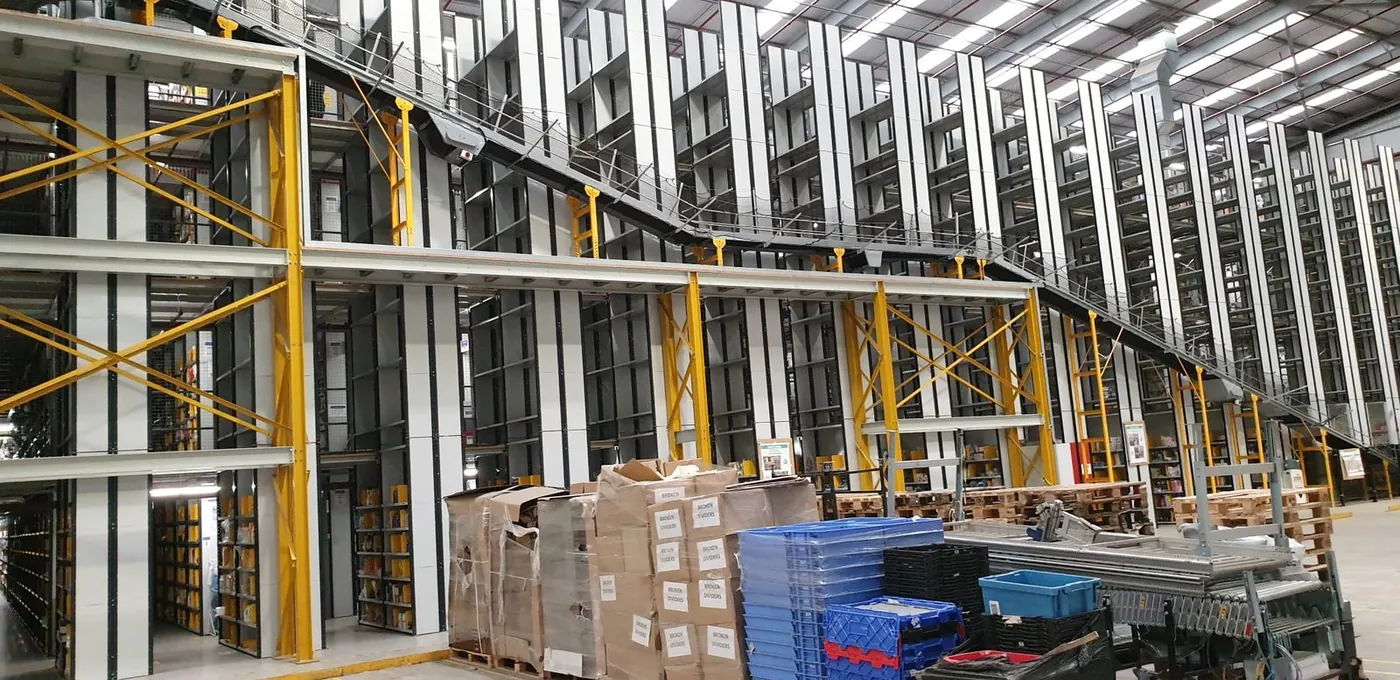
These are not typical programme lengths for full systems — a sortation system will still take its 12–25 weeks order-to-live — but they show where the time in that programme sits. It sits in design and manufacture, off your site, while your operation runs untouched. The disruptive part at the end is short because everything difficult was already done.
Installing into a live operation without stopping it
Most UK warehouses cannot shut down for an installation, and with the right method they do not have to. The Gompels line was installed with zero downtime to the existing operation. The BMW kitting line was introduced into live production without stopping it — sequenced around shift patterns, with the new line built alongside the running process and cut over when proven. The Amazon pick tower went into a building that never stopped shipping.
The method is consistent: pre-built sections arrive ready to position, installation work is sequenced into windows the operation can give (nights, weekends, quiet shifts where needed), and the cutover happens only when the new equipment has already demonstrated it works. In food environments the same discipline applies harder still — the Tate & Lyle sugar-line conveyors serve a continuous 24/7 operation with zero permitted downtime, which shapes every hour of the installation plan.
It also helps that nothing about the building has to change. Orion systems fit inside existing structures — no building extensions, no planning permission, no landlord negotiations adding months to the front of the programme.
The peak-season calendar maths
For UK e-commerce, 3PL and parcel operations, the question behind the question is usually: can it be running before peak? Work the dates backwards from November and the answer writes itself.
A smaller conveyor package on a 6–10 week programme, ordered in late August, is typically running by early November — installed, commissioned and settled in before peak volumes arrive. That is the comfortable version of the timeline, with weeks in hand for the operation to get used to the new line.
Leave the decision until autumn and the same maths turns against you: the machine you order in October arrives in the new year. It will still be a good machine — it just spends peak as a purchase order while your team spends peak on overtime and agency rates. The guide to the real cost of manual sortation puts numbers on exactly what that costs at £16.30/hr all-in.
Full sortation systems need the decision earlier still. At 12–25 weeks order-to-live, a Helix system intended to be sorting before Christmas needs its order placed in spring or early summer, with the FDS signed off promptly behind it. If you are reading this in autumn with peak already looming, the honest advice is to talk about next year's peak now — and let this year's numbers make the case.
What this means for your decision
Installation time is rarely the reason to delay automation — the programme is shorter than most buyers expect, the disruptive portion is measured in days or weeks rather than months, and the cost of waiting is a full peak season of manual labour. The commercial side of the decision is covered in what warehouse automation costs in the UK, and everything is available on monthly finance from around £4,000 per month on a 60-month term, subject to specification and approval — so the system can start paying for itself from the month it goes live.
Whether you run a parcel centre, a 3PL, a fulfilment operation or a food manufacturing site, the sequence is the same — and the ROI calculator will tell you what the machine earns while you wait for it.